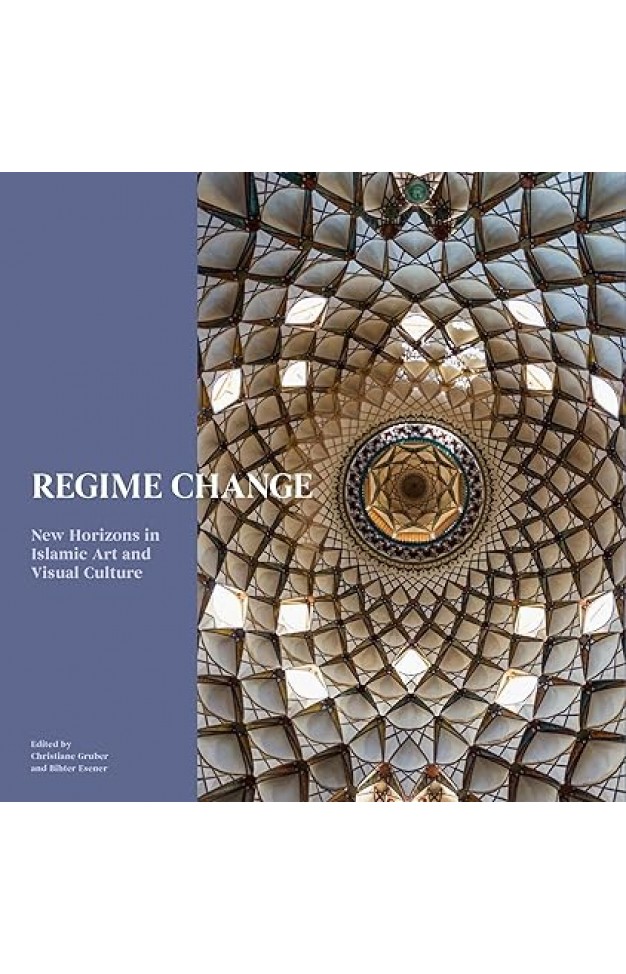
A collection that treats Islamic art history as a field in motion. The essays in Regime Change do not simply describe objects; they examine the political and intellectual shifts that shaped how those objects were made, used, and studied. It earns its place on the shelf of any reader who wants to understand the forces that have shaped Islamic visual culture.
No reviews yet — be the first to share your thoughts.
Sign in to leave a review. Only verified purchasers can submit reviews.
It is a collection of nine essays on Islamic art and visual culture. The essays examine how political regime changes, shifts in patronage, and the agency of craftsmen have shaped the production and meaning of Islamic art across different regions and periods.
The book is edited by Christiane Gruber and Bihter Esener, with Melanie Gibson as series editor. It belongs to the Art Series published by Gingko Library.
The essays were first presented at the Historians of Islamic Art Association's (HIAA) seventh biennial symposium, which was titled "Regime Change."
The essays address a range of subjects, including the intentions of patrons, the agency of craftsmen, responses to previous artistic production, and changes to Qur'an production in Sumatra due to dynastic and political shifts. The book also examines the broader regimes of thought and changing trends that structure the field of Islamic art history.
It is intended for a college and higher education audience, including students and scholars of Islamic art, art history, visual culture, and Islamic studies. It also suits general readers with a serious interest in the subject.
